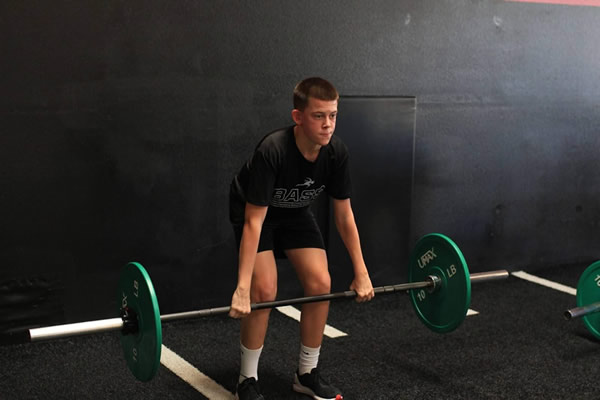
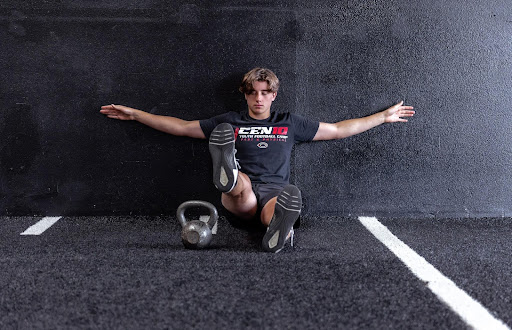
Core training for athletes is an important component of development and, more specifically, injury prevention. Because the focus is not necessarily on max strength and more so on developing greater motor control, core development can begin for athletes at almost any age. To keep things simple, core training and exercises can be defined as any exercise that helps to develop a stable spine (core stability) while also allowing for powerful movement. This is where core training plays a significant role in preventing injury, because when an athlete can move efficiently and powerfully, their risk of non-contact injuries declines.
Core stability can be thought of as the bridge between upper-body movement and lower-body movement. The stronger this bridge is, the more torque (the rotational force created by muscles acting around the body’s joints) muscles can create. Think of a pitcher throwing a fastball in baseball. The force production to throw a ball hard and safely begins by pushing powerfully through the legs, and this force is then transferred to the upper body and generates powerful torque through the shoulder girdle. For a youth baseball player, a strong core can help prevent injuries such as rotator cuff strains and tendonitis, and reduce the possibility of labrum tears.
Core Exercises for Sports
When it comes to core development for athletes, it’s important to think broader than simply building the abdominal muscles. A good program should be designed with movement being the primary focus. Most movements of the trunk involve four basic movement patterns: trunk flexion, trunk extension, trunk rotation, and trunk lateral flexion. Exercises should not be overly complicated, should begin with the aforementioned movement patterns, and should progress from simple to moderate to advanced. Focusing on movement will increase the transfer of training to actual sports performance.
The transfer of core development to sport-specific tasks is the key to keeping athletes healthy. This can be done by making sure exercises are specific to movement patterns athletes will use when competing. Many sport activities involve single-limb actions, and so single-limb training should make up a significant portion of an athlete’s program. Single-limb training also causes a level of instability that increases core activity. This is important because during sport-specific tasks, athletes are often required to move in ways that require them to create stability for the transfer of force. The greater the difference between the training movements and the sports actions, the less potential there is for sports performance transfer.
To Wrap It Up
The purpose of a strong core is to provide an efficient and powerful transfer of force through the limbs. The better the transfer of force, the safer athletes will be when performing sport-specific tasks, and the higher their level of performance. Core training for athletes should be focused on the four basic movement patterns of the trunk, and exercises should be programmed based on what’s appropriate for the athlete’s age and/or training level. Training the core is not only about developing abs, it is crucial for safety and higher performance for athletes.
Ray Bass
Bass Athletics
CSCS
Contact Information
📍 Address: 500 Harrington St unit c-1, Corona, CA 92878
📞 Phone: 951-847-1260
🌐 Website: https://bassathletics.com
🕒 Hours: Monday–Friday 9:00 AM – 7:00 PM